


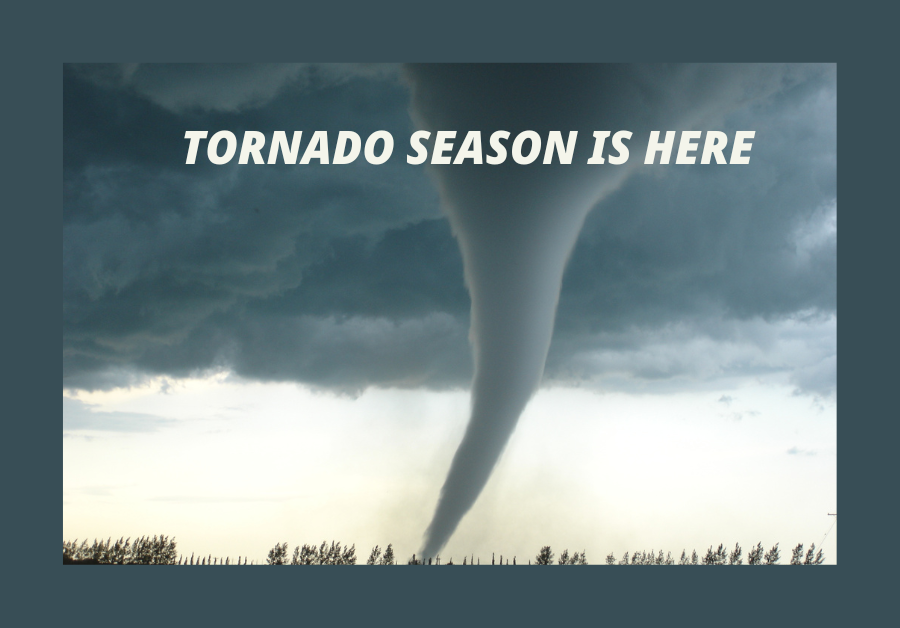
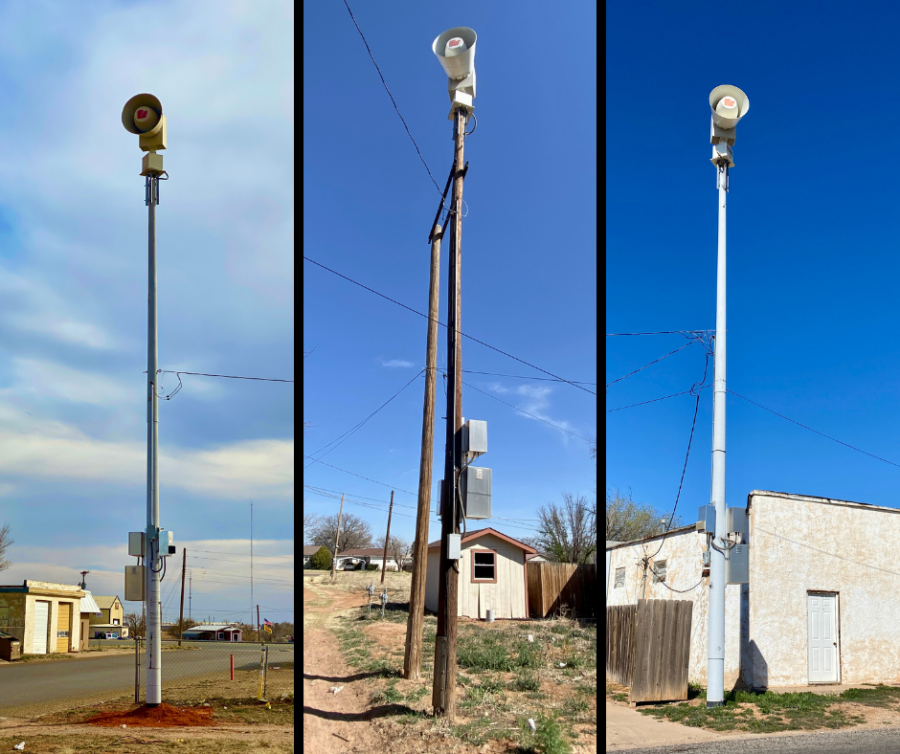
Tornado season is here on the South Plains so it’s time to get prepared for severe weather when it occurs. Although Terry County and surrounding counties have not seen much weather in the past several months, citizens still need to be prepared, especially after the tornado outbreak that took place recently in Mississippi and Alabama, which killed 26 people. Brownfield is considered “storm ready” and every county is required to have an emergency management operation. According to the City of Brownfield, there are seven “tornado sirens” in Brownfield, and each one has batteries to make sure they work in case there is an outage.
Of course, most know that a tornado is a violently rotating column of air extending from the base of a thunderstorm down to the ground. Tornadoes are capable of completely destroying well-made structures, uprooting trees, and hurling objects through the air like deadly missiles. Tornadoes can occur at any time of day or night and at any time of the year. Although tornadoes are most common in the Central Plains and the southeastern United States, they have been reported in all 50 states.
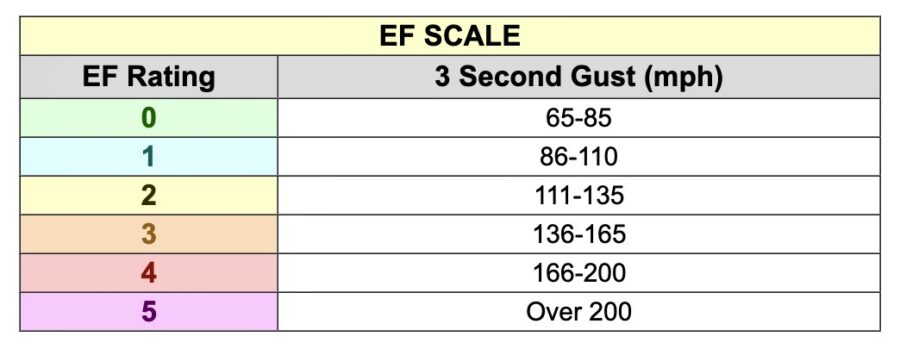
Tornados are rated by the Enhanced Fujita Scale or EF Scale, which became operational on February 1, 2007, and was revised from the original Fujita Scale to reflect better the storm damage that is associated with the actual wind speeds from a tornado. The new scale has to do with how most structures are designed and is used to assign a tornado a ‘rating’ based on estimated wind speeds and related damage. When tornado-related damage is surveyed, it is compared to a list of Damage Indicators (DIs) and Degrees of Damage (DoD) which help estimate better the range of wind speeds the tornado likely produced. From that, a rating (from EF0 to EF5) is assigned.
The National Weather Service (NWS) is the only federal agency with the authority to provide ‘official’ tornado EF Scale ratings. The goal is to assign an EF Scale category based on the highest wind speed that occurred within the damage path. First, trained NWS personnel will identify the appropriate damage indicator (DI) [see list below] from more than one of the 28 used in rating the damage. The construction or description of a building should match the DI being considered, and the observed damage should match one of the 8 degrees of damage (DOD) used by the scale. The tornado evaluator will then make a judgment within the range of upper and lower bound wind speeds, as to whether the wind speed to cause the damage is higher or lower than the expected value for the particular DOD. This is done for several structures, not just one before a final EF rating is determined.
On May 11, 1970, an F-5 (EF5) tornado formed over the southwest corner of Lubbock and touched down just south of the downtown area and tracked toward the northeast near US 87 or I-27, just east of the Texas Tech campus, and continued for 8 miles before lifting. The tornado destroyed over 1000 homes and apartment units, 10,000 vehicles, and over 100 aircraft. It also killed 26 people and injured 500. This tornado that hit Lubbock was studied and mapped in detail by Professor Fujita, and was important in the development of his Fujita Scale.
During the spirng season, you will sometimes see on TV or hear on the radio there is either a tornado watch or a tornado warning issued by the NWS, because it is the only agency that put out that information.
What is the difference between the two?
- Tornado Watch: Be Prepared! Tornadoes are possible in and near the watch area. Review and discuss your emergency plans and check supplies and your safe room. Be ready to act quickly if a warning is issued or you suspect a tornado is approaching. Acting early helps to save lives! Watches are issued by the Storm Prediction Center for counties where tornadoes may occur. The watch area is typically large, covering numerous counties or even states.
- Tornado Warning: Take Action! A tornado has been sighted or indicated by weather radar. There is imminent danger to life and property. Move to an interior room on the lowest floor of a sturdy building. Avoid windows. If in a mobile home, a vehicle, or outdoors, move to the closest substantial shelter and protect yourself from flying debris. Warnings are issued by your local forecast office. Warnings typically encompass a much smaller area (around the size of a city or small county) that may be impacted by a tornado identified by a forecaster on radar or by a trained spotter/law enforcement who is watching the storm.
What do you need to do during a tornado?
- Stay Weather-Ready: Continue to listen to local news or a NOAA Weather Radio to stay updated about tornado watches and warnings.
- At Your House: If you are in a tornado warning, go to your basement, safe room, or an interior room away from windows. Don’t forget pets if time allows.
- At Your Workplace or School: Follow your tornado drill and proceed to your tornado shelter location quickly and calmly. Stay away from windows and do not go to large open rooms such as cafeterias, gymnasiums, or auditoriums.
- Outside: Seek shelter inside a sturdy building immediately if a tornado is approaching. Sheds and storage facilities are not safe. Neither is a mobile home or tent. If you have time, get to a safe building.
- In a vehicle: Being in a vehicle during a tornado is not safe. The best course of action is to drive to the closest shelter. If you are unable to make it to a safe shelter, either get down in your car and cover your head, or abandon your car and seek shelter in a low lying area such as a ditch or ravine.
What should we do after a tornado?
- Stay Informed:Continue to listen to local news or a NOAA Weather Radio to stay updated about tornado watches and warnings. Multiple rounds of thunderstorms capable of producing tornadoes are possible during severe weather outbreaks.
- Contact Your Family and Loved Ones: Let your family and close friends know that you’re okay so they can help spread the word. Text messages or social media are more reliable forms of communication than phone calls.
- Assess the Damage: After the threat for tornadoes has ended, check to see if your property has been damaged. When walking through storm damage, wear long pants, a long-sleeved shirt, and sturdy shoes. Contact local authorities if you see power lines down. Stay out of damaged buildings. Be aware of insurance scammers if your property has been damaged.
- Help Your Neighbor: If you come across people that are injured and you are properly trained, provide first aid to victims if needed until emergency response teams arrive.
