


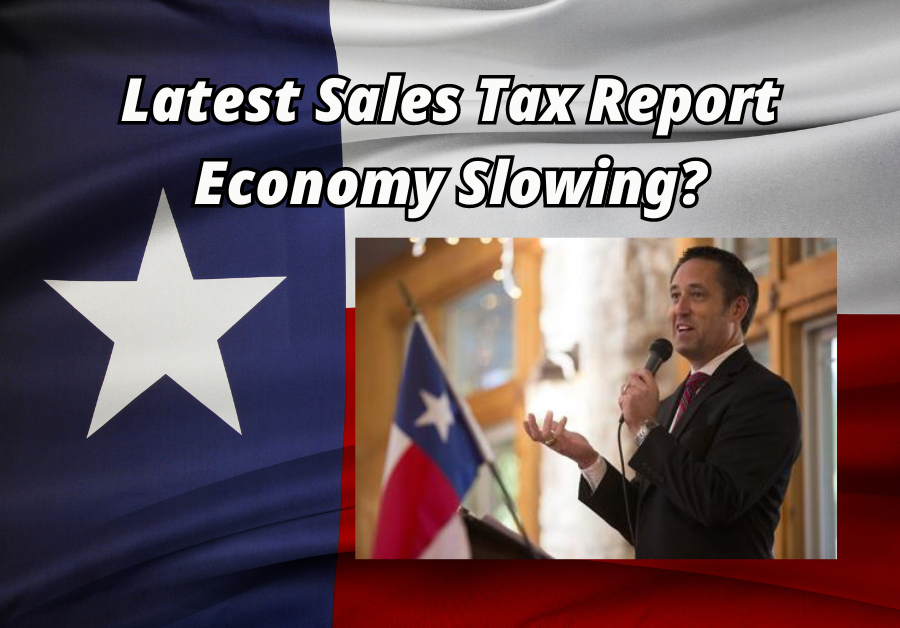
Texas Comptroller Glenn Hegar released the state sales tax revenue on November 1, 2023, and it totaled $3.81 billion in October, which is down 0.3 percent from October 2022. The majority of October sales tax revenue is based on sales made in September and remitted to the agency in October.
Although the state as a whole was down in sales tax this past month, the City of Brownfield, City of Meadow, City of Wellman, and Terry County saw an increase in sales tax revenue. Beginning with Brownfield, which brought in $148,886.03 and was up 16.31% compared to last year at this time. Also, Brownfield is up for the year-to-date by 9.24% bringing in $1,383,512.78. Terry County also took in more than last year this time with an increase of 39.23% or $88,188.28 compared to $63,339.23. For the year-to-date revenue, the county is up 15.86% to $691,633.63 from $596,906.24.

In the two smaller cities in Terry County, both Meadow and Wellman faired well. Meadow brought in $1,686.62 which was up 118% from last year at this time. Also, Meadow’s year-to-date is up $92,333.92 from $16,354.52, which is a 464.57% increase year-to-date. Wellman’s revenue was $969.17 from $643.69 a year ago at this time which is a 50.56% increase. Like the other cities, Wellman’s year-to-date revenue is also up by 29.10% from $5,290.16 to $6,829.68.
Hegar said, “For the first time in 31 months following the end of pandemic restrictions, monthly state sales tax collections failed to grow on an annual basis,” Hegar also went on to say, “October sales tax collections are in line with our recent Certification Revenue Estimate, which predicted slower economic growth in the months ahead. Contributing to the year-over-year decline was erratic refund activity this month, as well as notable declines in receipts from some sectors which could indicate a slowing economy.”
In Hegar’s report, the receipts from the larger business spending-driven sectors such as manufacturing and wholesale trade, declined significantly from a year ago, and receipts from the construction sector barely surpassed the previous year. According to Hegar, this could be due to declines in business input prices, but it could also indicate slowing production. However, receipts from the oil and gas mining sector continued to exceed those of the previous year.
Among consumer-dependent retail trade sectors, receipts from home improvement centers and furniture stores dropped sharply from a year ago. Receipts from electronics and appliance stores, big-box general merchandisers, department stores, and clothing stores were also down significantly. Receipts from online merchants and gasoline stations were up slightly but at less than the rate of general price inflation. Declines in retail sales from a year ago may reflect numerous factors, including reallocation of household budgets away from goods to services and to higher debt-service costs, falling prices for some categories of goods such as electronics, and depletion of excess savings that households had accumulated during the pandemic.

Receipts from restaurants grew only modestly and at less than the rate of inflation for food away from home. But spending for live entertainment continued to boom, spurring double-digit growth in receipts from music, arts, and sporting events.
Total sales tax revenue for the three months ending in October 2023 was up 2.7 percent compared with the same period a year ago. Sales tax is the largest source of state funding for the state budget, accounting for 57 percent of all tax collections.
Texas collected the following revenue from other major taxes:
- motor vehicle sales and rental taxes — $606 million, up 3 percent from October 2022;
- motor fuel taxes — $316 million, up 1 percent from October 2022;
- oil production tax — $586 million, up 8 percent from October 2022;
- natural gas production tax — $192 million, down 53 percent from October 2022;
- hotel occupancy tax — $67 million, up 2 percent from October 2022; and,
- alcoholic beverages taxes — $154 million, up 2 percent from October 2022.
