


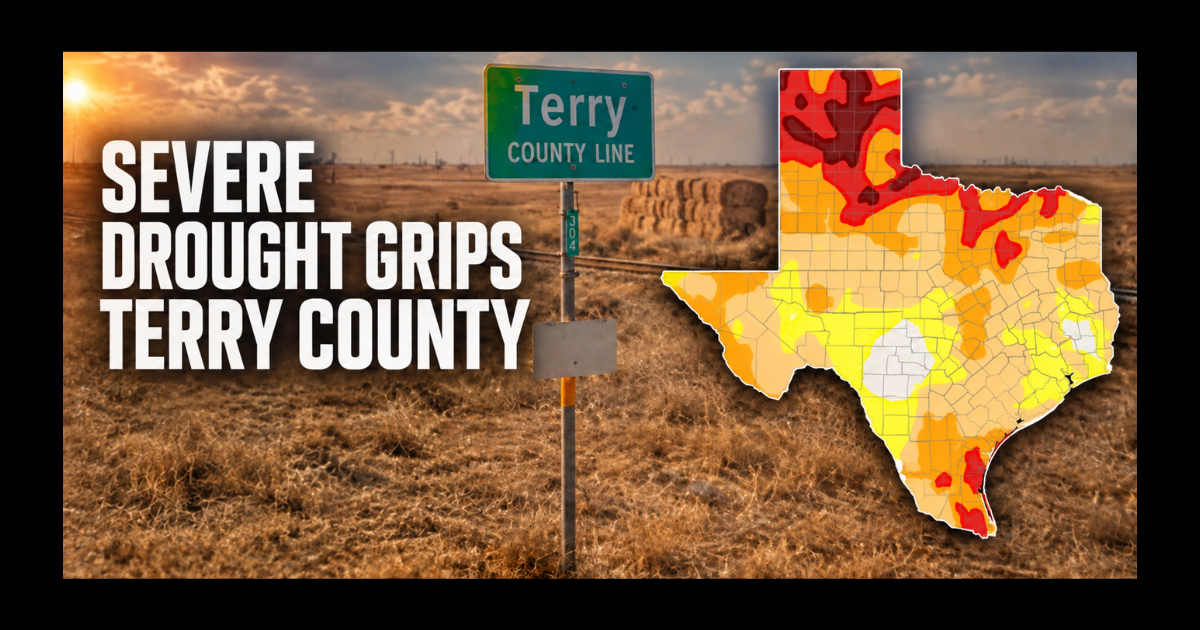
Terry County’s drought conditions have intensified after another hot, dry summer month, with nearly the entire county now classified as in severe drought.
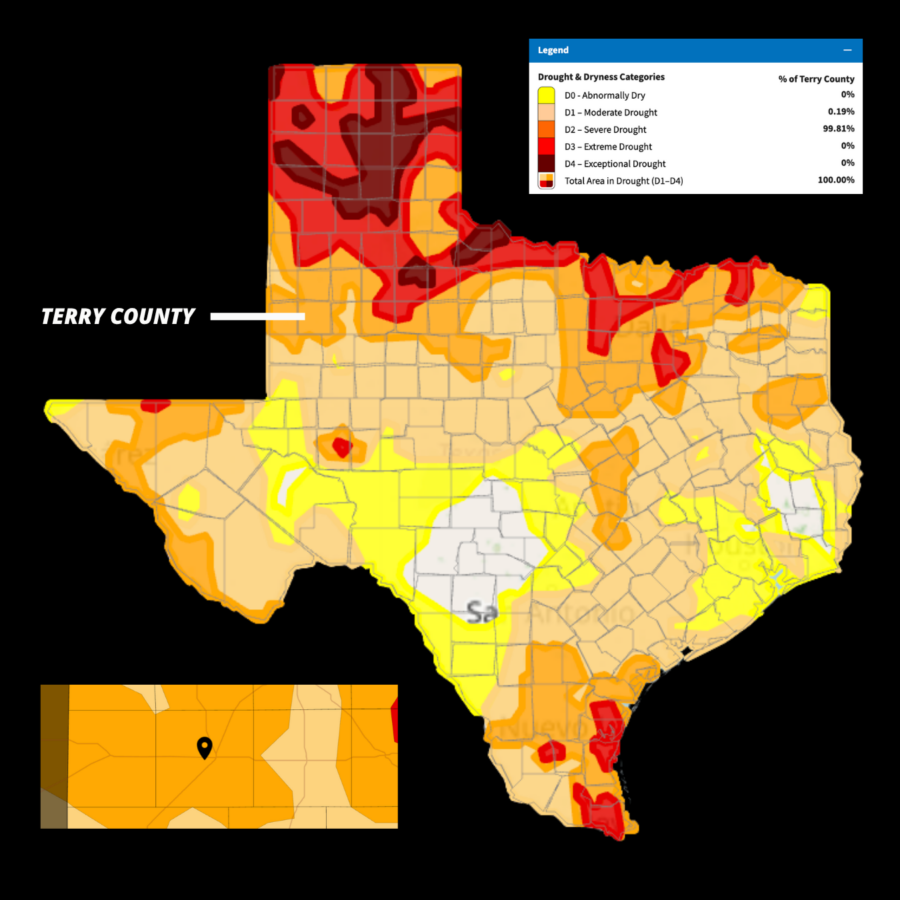
According to the latest U.S. Drought Monitor information, 100 percent of Terry County is experiencing drought. Approximately 99.81 percent is classified as D2, or severe drought, while the remaining 0.19 percent is classified as D1, or moderate drought. An estimated 12,651 residents are affected.

The latest map was released Sept. 10 and uses data valid through Sept. 8. August 2026 ranked as Terry County’s 17th-driest August in 132 years, with precipitation 1.68 inches below normal. The January-through-August period ranked as the county’s 21st-driest start to a year, with rainfall 3.89 inches below normal.
Rainfall records from the South Plains Underground Water Conservation District further illustrate the shortage. Through July, the district’s Terry County monitoring locations recorded an average total of only 4.95 inches for 2026.
Individual totals ranged from 1.13 inches at TC23 to 8.99 inches at TC18. June provided most of the year’s moisture, averaging 3.06 inches across the monitoring locations. The county averaged just 0.53 inches in July.
The district has not yet released official August rainfall amounts, but August was another noticeably dry month. The latest drought information indicates that any isolated rainfall was not enough to provide meaningful relief.
Local farmer and producer Mason Becker said farmers are accustomed to extended dry periods, but the frequency and severity of drought have changed.
“Farmers in our area are no strangers to extended periods without rain,” Becker said. “What seems different now is the extent, duration and frequency of drought during the last 15 years. At one time, we might miss one out of five crops. Now, we are lucky to make one out of five.”
Becker said crops are dying in dryland fields, while available irrigation can no longer keep pace with crop-water demands.
“We are too far into this crop for rainfall to make much difference in yields, but we still need several good rains to finish the crop and fill the soil profile for next season,” Becker said. “Pray for rain!”
Local farmer and rancher Katie Day said the current drought rivals—or may even exceed—the historic drought of 2011.
“This drought is as bad as 2011 for us, but it may be worse because we didn’t come into it with any underground moisture,” Day said. “You can drive around and see the cotton defoliating itself. Rusty said that, in his lifetime, he has never seen cotton do that. It looks like the dead of winter.”

Day said her family’s use of regenerative agricultural practices and efforts to minimize chemical applications have helped keep their operation in business. However, the drought is placing additional pressure on both crops and livestock.
They are already feeding cattle and providing protein supplements because there is no green grass. The family is fortunate to grow its own hay, she said, because purchasing enough hay at today’s prices could make keeping the cattle unaffordable.
“When it’s dry for livestock producers, it means they have to do more and pay even closer attention,” Day said. “It simply requires more management. Still, we’re managing, and we’re getting through it. This isn’t the first drought we’ve experienced, and it won’t be the last.”
Severe drought conditions can also lead federal agricultural offices to authorize emergency grazing on Conservation Reserve Program land. While that can provide additional forage, Day explained that dry CRP grass may not supply cattle with all the necessary nutrients, making supplemental protein and careful management essential.
The prolonged lack of moisture continues to threaten crops, rangeland, livestock operations, groundwater supplies and soil health across Terry County. Substantial, widespread rainfall will be needed to help the remaining crops finish, rebuild soil moisture and prepare local producers for the next growing season.
Something else to note: 212 of the 254 counties in Texas are under an outdoor burn ban, Terry County being one of those 212 counties.
