


Restaurants, retail stores and office buildings will now be able to operate at 75% capacity, Abbott said. Three regions — the Rio Grande Valley, Laredo and Victoria — were excluded from the loosening of restrictions, however.
/https://static.texastribune.org/media/files/2d9e5de74d6d96a42ecf91277d8bfc93/Abbott%20El%20Paso%20Presser%20IPA%20TT%2013.jpg)
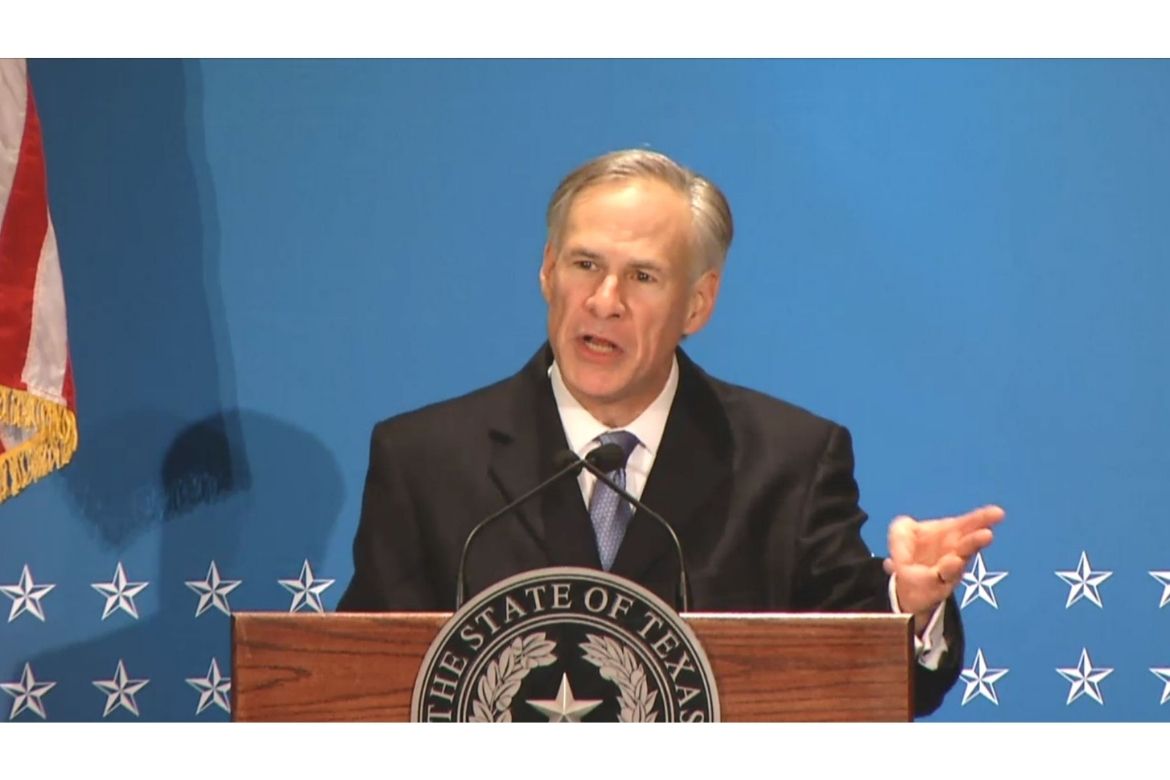
Gov. Greg Abbott announced Thursday that most of Texas will be able to loosen some coronavirus restrictions, including letting many businesses increase their capacity to 75%, as soon as Monday.
Retail stores, restaurants and office buildings, which have been open at 50% capacity, will be permitted to expand to 75% capacity. Hospitals will be allowed to offer elective procedures again and nursing homes can reopen for visitations under certain standards.

The new reopening stage applies to 19 of the state’s 22 hospital regions. The three hospital regions excluded are in the Rio Grande Valley, Laredo and Victoria. Abbott said those regions’ hospitalizations are still “in the danger zone,” which he defined as places where coronavirus patients make up 15% or more of all hospitalizations.
At the same time, Abbott said the state was not yet ready to reopen bars, saying they are “nationally recognized as COVID-spreading locations.” He stressed, though, that the state is looking for ways to let bars reopen safely.
Abbott unveiled the new standard during a news conference at the Texas Capitol that marked Abbott’s first major announcement about the reopening process since early summer. In late June, Abbott shut down bars and ordered restaurants to scale back to 50% capacity as case numbers started to surge.
Days later, Abbott issued a statewide mask mandate.

A few weeks later, key coronavirus metrics began to trend downward. Those statistics include daily new cases, daily new deaths, hospitalizations and the positivity rate. For example, the state reported 3,249 hospitalizations Wednesday, a drop from several days in July when the tally was above 10,000 but still higher than springtime numbers than hovered around 2,000 or lower. Also on Wednesday, the seven-day average of daily new cases was 3,415 — again, a significant decline from July highs but still clearly above the levels in April, May and June.
Still, there have been regular questions about the reliability of the state data. On Monday, state health officials announced they were changing the way they calculate the positivity rate — the ratio of cases to tests — an acknowledgment that the previous method was flawed.

Democrats noted the data issues in their pushback to Abbott’s news conference.
“Gov. Abbott’s press conference today was notable for what he didn’t say,” state Rep. Chris Turner of Grand Prairie, who chairs the House Democratic Caucus, said in a statement. “There was no mention of a contact tracing program, no mention of improving the state’s unreliable data and no mention of expanding Medicaid to increase access to health care for the millions of Texans who are uninsured.”
The Texas Democratic Party said Abbott is “basing his decisions on dirty data.”
Abbott began the news conference by hailing the state’s progress in the fight against coronavirus, saying the “biggest reason” for improvements has been that Texans are taking the pandemic seriously and exercising personal responsibility.
