


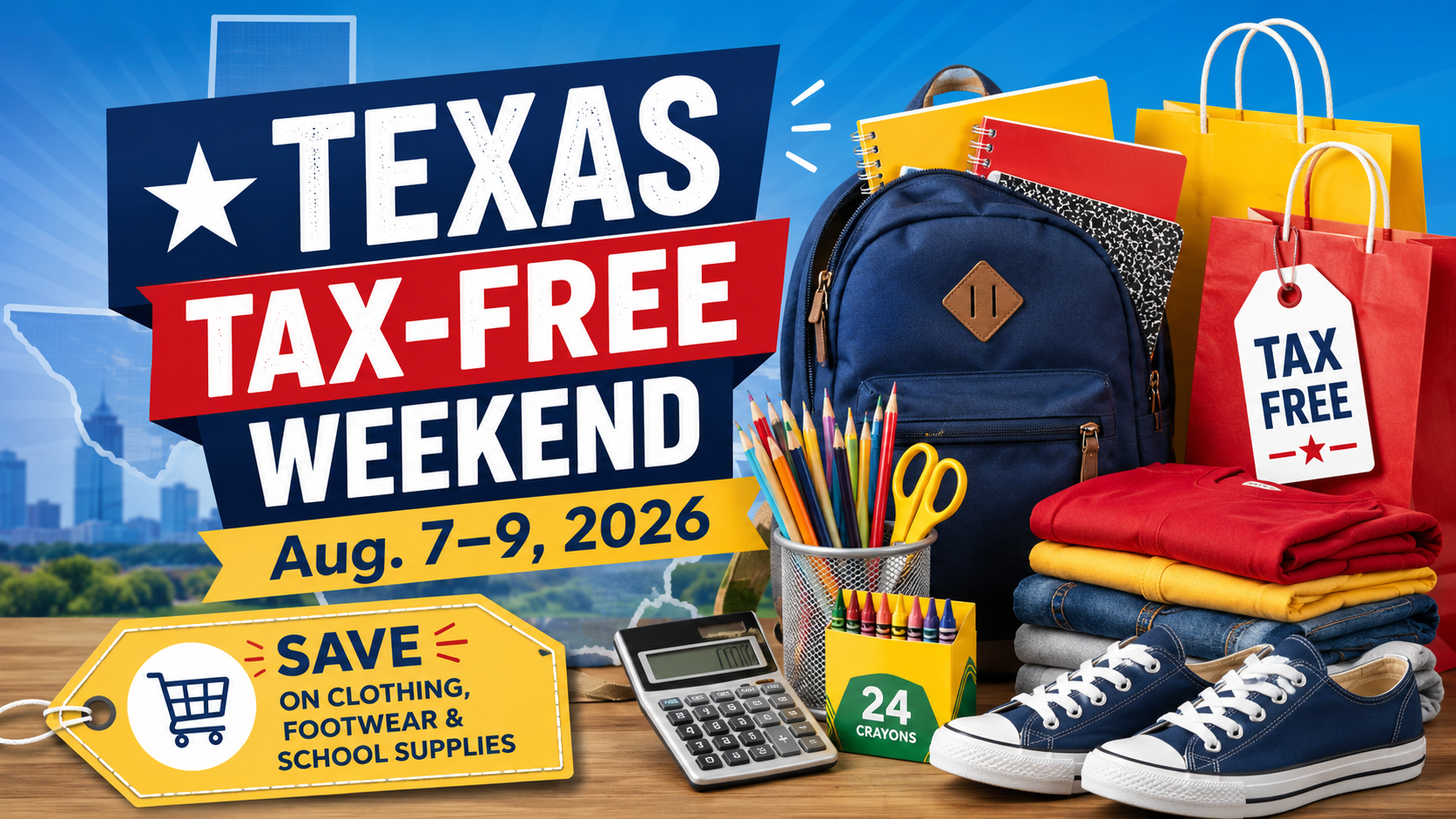
Texas shoppers will have an opportunity to save money on back-to-school clothing, footwear and supplies during the state’s annual sales tax holiday, scheduled for Friday, Aug. 7, through midnight Sunday, Aug. 9.
The Texas Comptroller’s Office is encouraging shoppers to support local Texas businesses while taking advantage of the three-day tax break.
During the holiday, most clothing, footwear, school supplies and qualifying backpacks priced at less than $100 per item can be purchased without paying state or local sales tax. Qualifying purchases may be made at Texas stores or through online and catalog sellers doing business in Texas. In most cases, shoppers do not have to provide an exemption certificate.
The exemption applies only to purchases completed during the official holiday period. Items purchased before Friday, Aug. 7, or after midnight Sunday, Aug. 9, will not qualify.
The $100 Rule Applies to Each Item
The tax exemption is determined by the price of each individual item, not the total amount of the shopping trip.
For example, a shopper who buys two shirts priced at $80 each would not pay sales tax on either shirt. Although the total purchase is $160, each individual shirt costs less than $100.
However, any item priced at $100 or more remains taxable.
There is no limit on the number of qualifying items a person may purchase during the weekend.
Clothing and Footwear That Generally Qualify
Most everyday clothing and footwear priced under $100 will be exempt from sales tax. Common qualifying items include:
- Shirts, blouses, pants, jeans, shorts and skirts
- Dresses, suits, jackets, sweaters and sweatshirts
- School, work, military, police, fire and other uniforms
- Socks, undergarments, pajamas and other sleepwear
- Baby clothing, bibs and diapers
- Raincoats and ponchos
- General-purpose boots, including cowboy and hiking boots
- Dress shoes, sandals, flip-flops, slippers and walking shoes
- Sneakers, tennis shoes and running shoes without cleats
- Swimsuits, jogging apparel and workout clothes
- Hats, baseball caps and knitted caps
- Scarves, neckties and belts with attached buckles
- Graduation caps and gowns
- Scout uniforms and religious clothing
The Texas Comptroller’s Office maintains a complete list of eligible and taxable clothing and footwear.
Items That Remain Taxable
Not everything worn or carried by a student qualifies for the holiday.
Items that remain taxable include:
- Clothing or footwear priced at $100 or more
- Jewelry, watches and watch bands
- Handbags, purses, wallets and briefcases
- Luggage and umbrellas
- Hair bows, barrettes, hair clips and headbands
- Protective sports equipment
- Football, hockey and soccer pads
- Helmets, goggles and life jackets
- Baseball gloves and cleats
- Football and soccer cleats
- Golf shoes and golf gloves
- Bowling, ballet, tap and specialty dance shoes
- Fishing waders and specialized water-sport footwear
- Fabric, thread, yarn, buttons and zippers
- Clothing alterations, embroidery, cleaning and repair services
- Clothing subscription boxes
- Rented clothing, uniforms, costumes and formal wear
Specialized athletic or protective items are generally taxable because they are designed primarily for a particular activity. Football pads and golf cleats, for example, do not qualify.
However, clothing that can also be worn for everyday activities—including tennis shoes, jogging suits and swimsuits—may qualify when priced under $100.
School Supplies That Qualify
Many common classroom supplies priced under $100 are also tax-free during the weekend.
Eligible school supplies include:
- Binders and folders
- Composition books and notebooks
- Loose-leaf paper, copy paper and graph paper
- Construction paper, poster board and tracing paper
- Pens, pencils and markers
- Crayons and highlighters
- Erasers and pencil sharpeners
- Pencil boxes and school supply boxes
- Calculators
- Rulers, compasses and protractors
- Scissors
- Glue, paste and glue sticks
- Index cards and index card boxes
- Legal pads and writing tablets
- Blackboard chalk
- Cellophane tape
- Lunch boxes
- Book bags
Only school supplies included on the Comptroller’s qualifying list and priced under $100 are exempt.
School supply kits may contain both exempt and taxable products. If the value of the exempt supplies is greater than the value of the taxable products, the kit qualifies. If the taxable portion is worth more, the entire kit is taxable.
Backpack Rules
Backpacks priced under $100 qualify only when they are intended for use by elementary or secondary school students.
Traditional school backpacks and book bags generally qualify. Other types of bags may remain taxable if they are not intended for student use.
Handbags, purses, briefcases and luggage do not qualify.
Online and Telephone Purchases
The tax exemption is not limited to purchases made inside a store.
Qualifying items may be purchased online, by telephone, through the mail, by custom order or through other purchasing methods. The transaction and payment must be completed during the sales tax holiday, even if the product is delivered later.
For example, a shopper who submits payment for qualifying school supplies at 5 p.m. Sunday, Aug. 9, may receive the exemption even if the order does not ship until several days later.
However, if the payment is declined Sunday night and is not successfully resubmitted until Monday, Aug. 10, the purchase will be taxable.
Placing an item on hold, receiving a rain check or making a special order without paying during the holiday does not automatically qualify the later purchase for the exemption.
Watch Shipping and Delivery Charges
Shipping, delivery, handling and transportation charges imposed by the seller count toward an item’s total sales price.
That means shoppers purchasing products close to the $100 limit need to pay close attention to added charges.
For example, a pair of jeans priced at $95 with a $10 delivery charge has a total sales price of $105. Because the final price exceeds $100, sales tax would be charged on the entire $105 purchase.
What to Do if Sales Tax Is Charged
Shoppers who are mistakenly charged sales tax on qualifying items purchased during the holiday may ask the seller for a refund.
The seller may issue the refund directly or provide the shopper with the appropriate form allowing a refund claim to be submitted to the Texas Comptroller’s Office.
The 2026 sales tax holiday begins at 12:01 a.m. Friday, Aug. 7, and ends at midnight Sunday, Aug. 9. Texans planning to participate are encouraged to check prices carefully, confirm that items qualify and consider shopping with local businesses throughout the weekend.
