


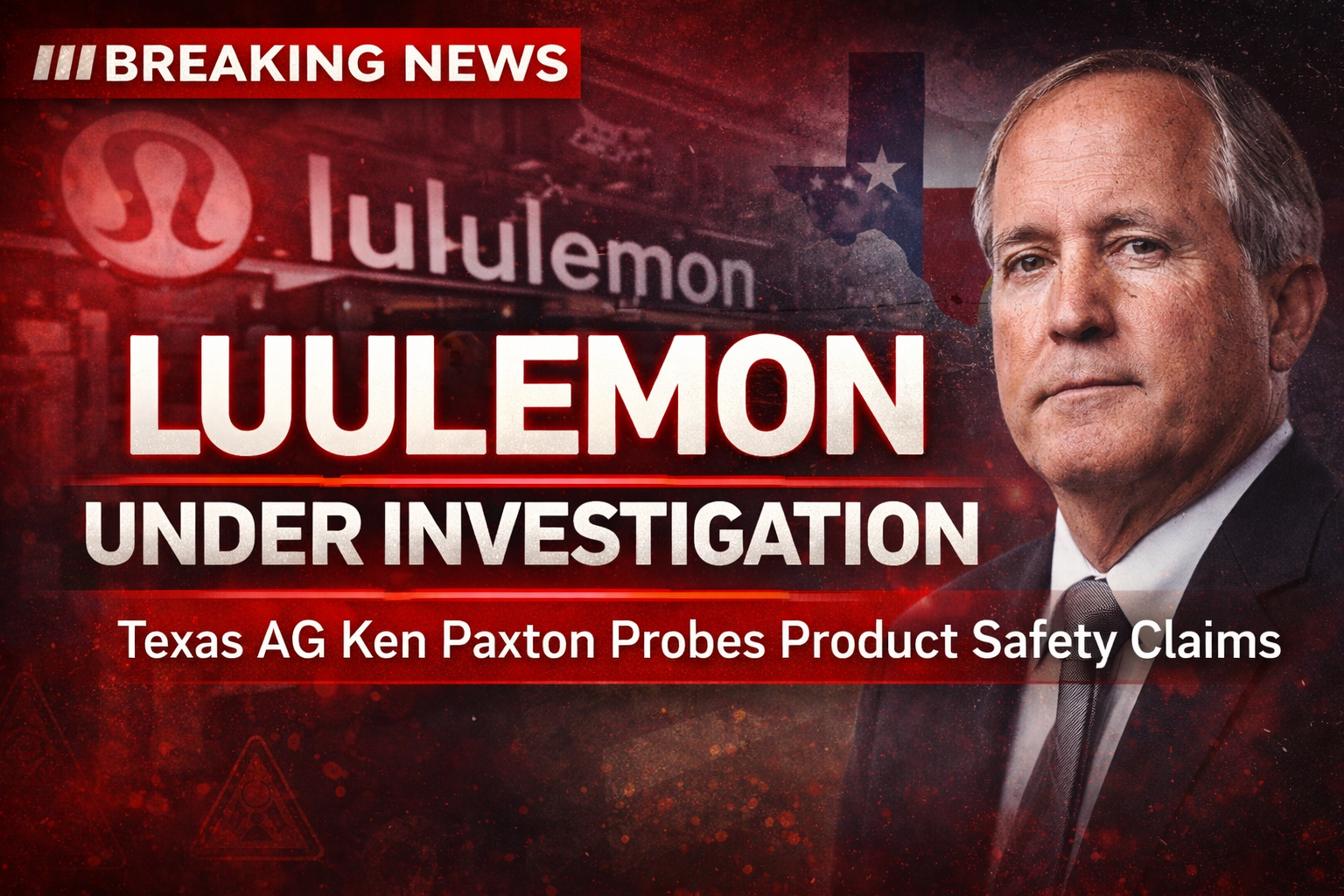
Texas Attorney General Ken Paxton has issued a Civil Investigative Demand (CID) to Lululemon USA Inc. as part of an ongoing investigation into whether the company may have misled consumers regarding the safety, quality, and potential health impacts of its products.
A Civil Investigative Demand is a legal tool that allows the Attorney General’s Office to request documents, data, and other information before formally filing a lawsuit. In this case, the CID signals a closer look at whether one of the nation’s most recognizable athletic apparel brands has been fully transparent with its customers.

Lululemon, a global leader in athletic and lifestyle apparel, reported more than $11 billion in revenue during its 2025 fiscal year. The company has built its brand around wellness, performance, and sustainability—marketing its products to consumers who prioritize health-conscious lifestyles and premium-quality materials.
However, growing concerns and emerging research have raised questions about whether some of the materials used in athletic wear across the industry—including Lululemon products—may contain synthetic chemicals that could pose potential health risks. Among those concerns are substances that have been linked in some studies to endocrine disruption, infertility, and certain types of cancer.
At the center of the investigation is whether Lululemon apparel contains PFAS, often referred to as “forever chemicals.” These compounds are known for their durability and resistance to water, stains, and heat, making them common in performance fabrics. However, PFAS have also drawn increased scrutiny nationwide due to their persistence in the environment and the human body, as well as potential long-term health effects.
Attorney General Paxton’s office will examine whether Lululemon’s use of such materials—if present—aligns with the company’s public messaging and branding. The investigation will also review Lululemon’s internal policies, including its Restricted Substances List, product testing procedures, and supply chain practices, to determine whether the company is meeting its own stated safety standards and complying with Texas consumer protection laws.
“Americans should not have to worry if they are being deceived when trying to make healthy choices for themselves and their families,” Paxton said in a statement. “I will not allow any corporation to sell harmful, toxic materials to consumers at a premium price under the guise of wellness and sustainability. If Lululemon has violated Texas law, it will be held accountable.”

The investigation reflects a broader trend of increased scrutiny on major brands that market themselves as environmentally friendly or health-conscious. Consumers are paying closer attention to what goes into the products they wear and use daily, and state officials are responding with more aggressive oversight to ensure transparency and accountability.
At this stage, the CID does not imply wrongdoing, but it does mark a significant step in determining whether further legal action could follow. The outcome of the investigation could have implications not only for Lululemon but for the broader athletic apparel industry as questions around chemical safety and product transparency continue to gain attention nationwide.
For Texas consumers, the case underscores an important message: companies that promote health, wellness, and sustainability may face increasing pressure to ensure their products truly align with those claims.
