


As license plate readers appear locally and across Texas, communities weigh crime-fighting benefits against questions about privacy, data access and transparency.
Automated license plate reader cameras, often known by the brand name Flock cameras, are becoming more common across Texas. Law enforcement agencies, cities, counties, neighborhoods, and private businesses have used the technology to help identify vehicles connected to crimes, stolen vehicles, missing persons cases, and active investigations. At the same time, the rapid expansion of these cameras has raised questions about privacy, oversight, data sharing and how much surveillance is appropriate in a free society.
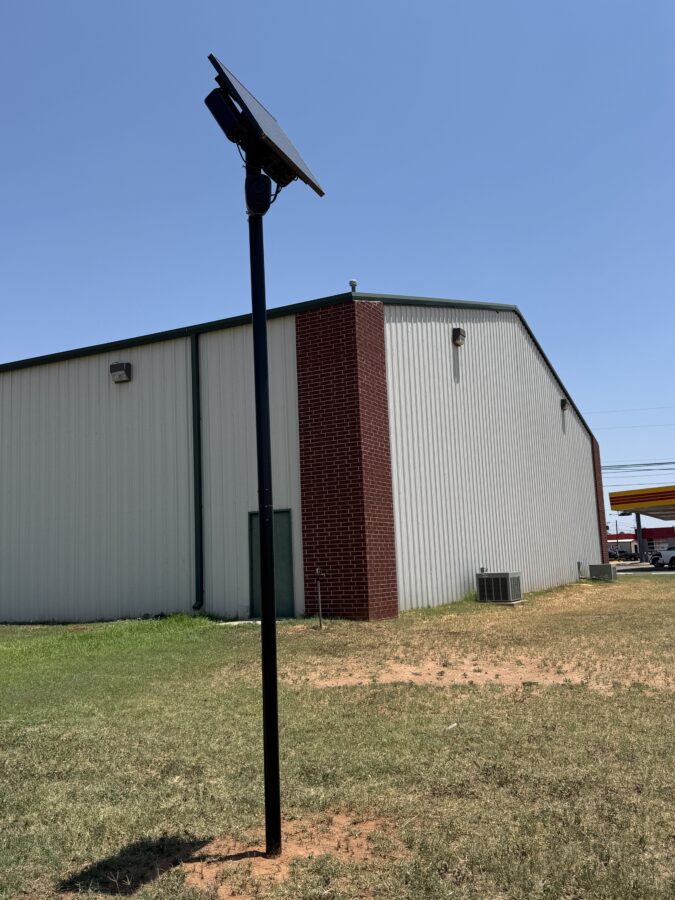
Flock Safety cameras are not traditional traffic cameras. They do not issue speeding tickets or red-light violations, which in Texas, that is no longer legal. Instead, they capture images of license plates and vehicle details, then compare that information with law enforcement databases or “hot lists.” The cameras are designed to collect vehicle-related data that may be searched later by authorized users, depending on local policies and access agreements.
It is also important not to confuse Flock cameras with traffic flow and safety cameras that are often mounted on traffic light poles at intersections. Those cameras are generally used to monitor traffic conditions, accidents, congestion, and travel updates. They do not ticket drivers. Traffic flow and safety cameras may be used by the Texas Department of Transportation, city traffic departments, and local news stations to help inform the public and improve roadway response.
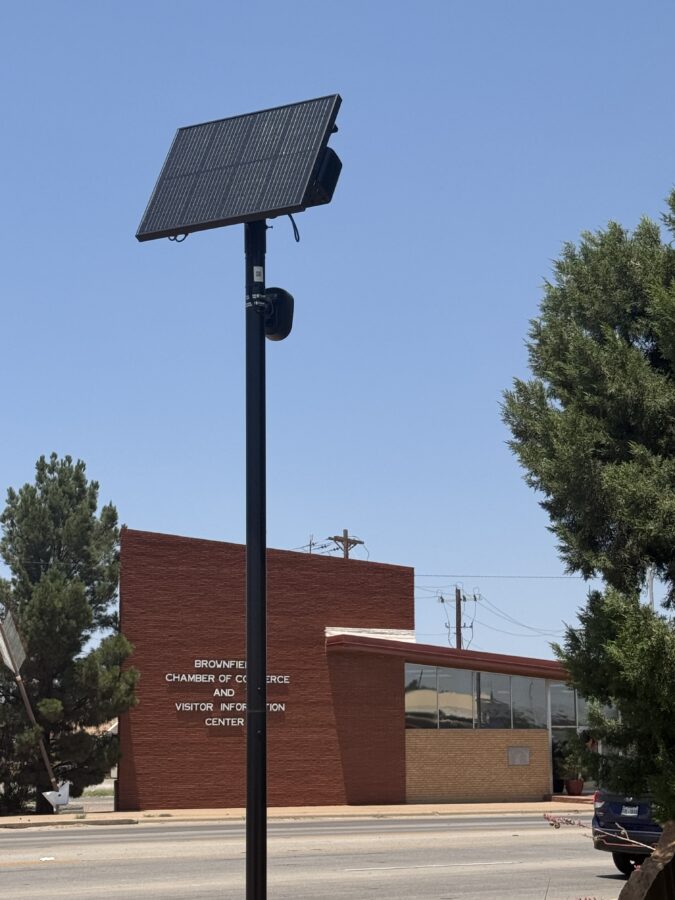
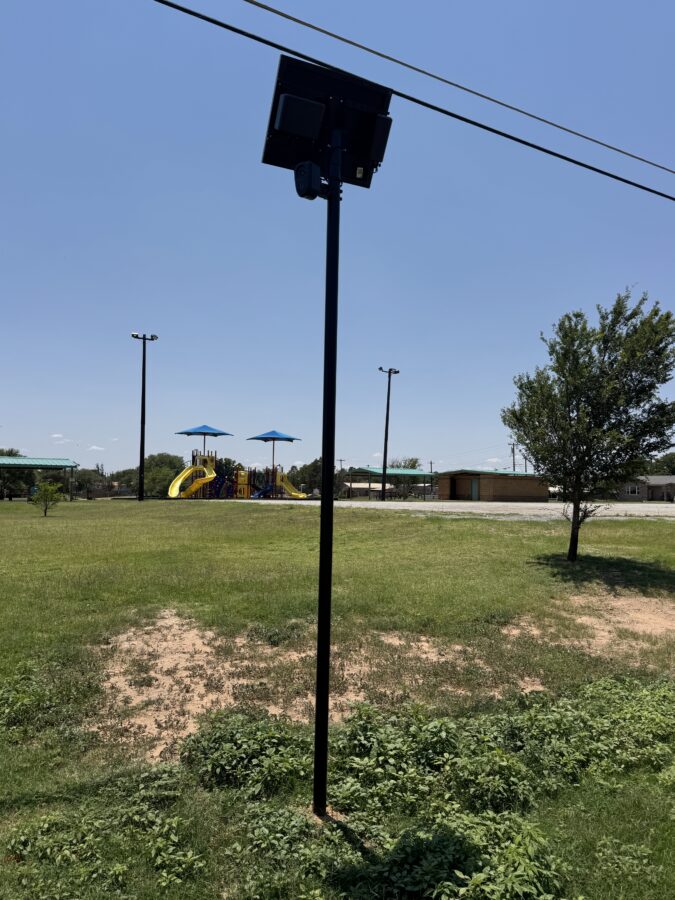
In recent months, Flock cameras have also been spotted in Brownfield and Terry County. TownTalk Media is aware of six such cameras in the area, with four of them located inside the Brownfield city limits. Their presence locally has added Brownfield and Terry County to a growing list of Texas communities where residents, law enforcement and local officials are having conversations about public safety, privacy and transparency.

Supporters of the technology argue that Flock cameras give officers another tool to solve crimes more quickly. Police departments have said the cameras can help locate stolen vehicles, identify suspects, assist in Amber Alerts or Silver Alerts, and connect vehicles to burglaries, robberies, and other investigations. In some Texas cities, law enforcement officials have credited automated license plate readers with helping recover stolen vehicles and assist in criminal investigations.
However, privacy advocates and some residents say the issue is not simply whether the technology can help solve crimes. Their concern is how much information is collected on everyday drivers who are not suspected of wrongdoing. Critics argue that when cameras are placed throughout a city or county, they can create a record of where people travel, worship, work, shop, seek medical care, or attend political events. Civil liberties groups have warned that the technology can become a form of mass surveillance if policies are not clear, transparent, and limited.
The debate has grown across Texas. Some communities have expanded the use of Flock cameras, pointing to crime-solving benefits and faster response times. Others have reviewed or limited the technology because of privacy questions and concerns over how data is shared with outside agencies.
Other Texas cities have taken different approaches. Some have adopted policies limiting automatic data sharing with outside law enforcement agencies, requiring requests to be tied to specific criminal investigations or prosecutions. In other places, city leaders have reconsidered or discontinued contracts after public debate. These examples show that the conversation is not the same in every community, and local policies can vary widely.
The central question for many communities is not whether public safety matters or whether privacy matters. Most Texans value both. The question is how to balance the two. Law enforcement agencies say they need modern tools to respond to modern crime, especially when suspects can move quickly across city and county lines. Privacy advocates say those tools should come with clear limits, public reporting, strong audit trails and local oversight.
Policy questions often include: Who owns the data? Who can access it? How long is it stored? Can outside agencies search it? Is a warrant required? Are searches audited? Can private cameras be connected to law enforcement systems? What happens if the technology makes a mistake? These questions are especially important because Flock cameras do not only capture information about suspects; they also collect information from thousands of ordinary vehicles passing by each day.
There are also concerns about accuracy. Automated license plate reader technology can misread plates because of poor lighting, weather, dirt, damaged plates, temporary tags, or unusual angles. A misread plate does not automatically mean someone is guilty, but critics say errors can lead to unnecessary stops or investigations if officers rely too heavily on the technology without verification.
At the same time, many residents who support the cameras say communities should not ignore tools that can help solve real crimes. For victims of stolen vehicles, burglaries, or violent crimes, faster identification of a suspect vehicle can matter. Supporters often argue that cameras placed in public areas are simply recording vehicles already traveling on public roads, and that law-abiding citizens benefit when police can respond more efficiently.

For Texas cities and counties considering or already using Flock cameras, transparency may be the key to public trust. Communities may want to know where cameras are located, what crimes they are used for, how often the system is searched, how many cases it has helped solve, how long data is retained, and whether outside agencies have access. Clear local policies can help prevent misuse while still allowing law enforcement to use the technology for legitimate public safety purposes.
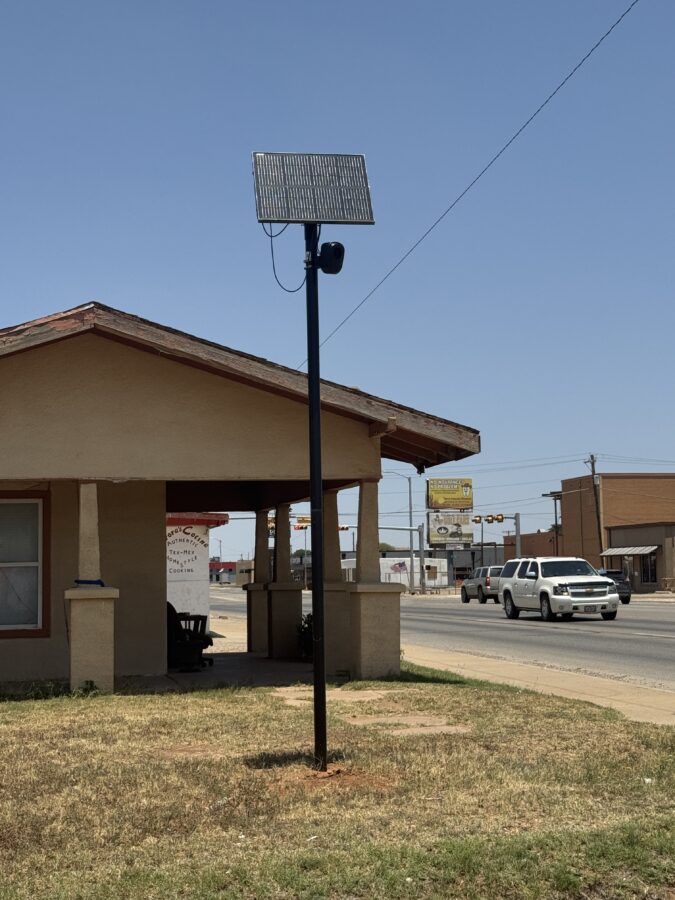
For Brownfield and Terry County residents, the appearance of these cameras raises the same questions being asked across the state. Some may view them as a helpful law enforcement tool. Others may want more information about who authorized them, who has access to the data, and what safeguards are in place. Either way, the issue is likely to become part of a broader local conversation about technology, safety and privacy.
The debate over Flock cameras is likely to continue as more Texas communities install, review or reconsider the technology. Supporters see them as a practical crime-fighting tool. Critics see them as a step toward routine surveillance of everyday life. For local governments, the challenge will be deciding whether the benefits outweigh the risks—and, if the cameras are used, making sure strong safeguards are in place.
In the end, the Flock camera issue is about more than technology. It is about public safety, privacy, trust in government and the kind of oversight citizens expect when new surveillance tools are introduced into their communities.
